Viktor Wolf · 19 November 2026
Storm Recovery Insights Offer Clues for Adapting Remote Lighthouse Access in Changing Conditions
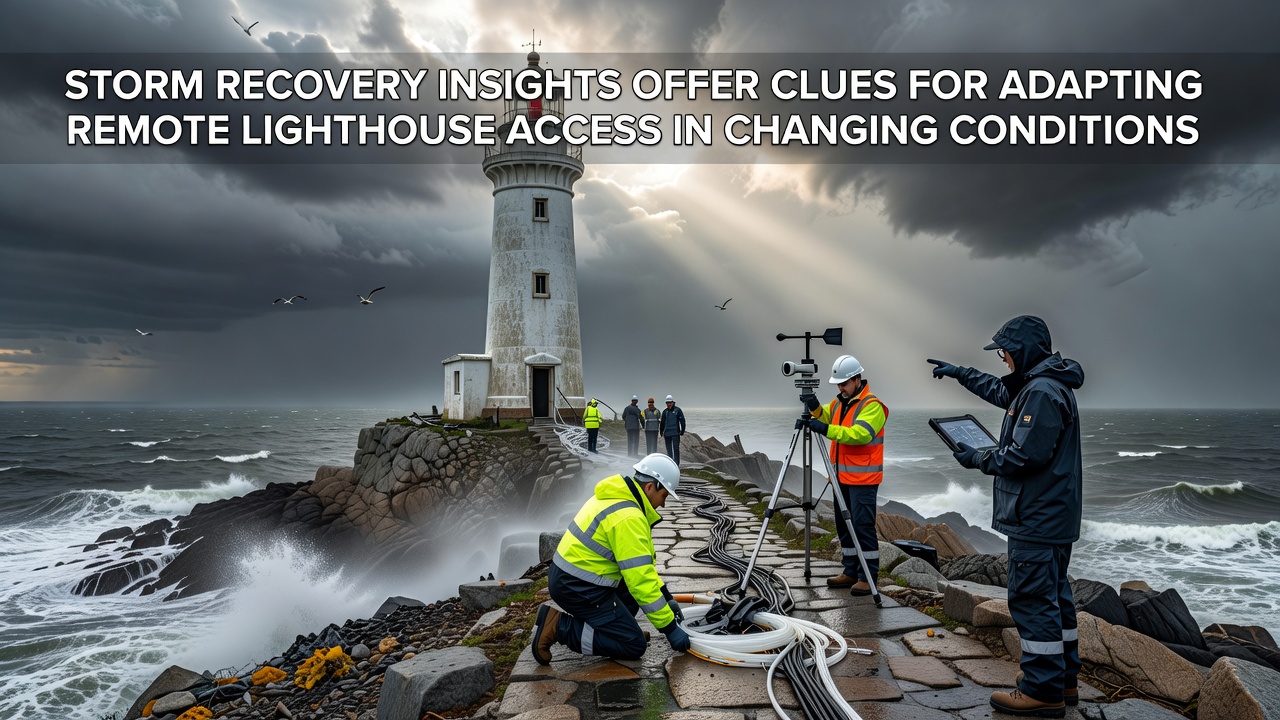
Coastal monitoring programs have compiled extensive records from recent storm events that highlight patterns in lighthouse infrastructure damage and subsequent recovery timelines, and these datasets now guide efforts to modify remote access systems for lighthouses facing shifting environmental pressures. Data collected through networks of tide gauges, wind sensors, and structural monitors reveal how wave overtopping and high-velocity winds repeatedly compromise traditional pathways to isolated light stations, while recovery crews document the time required to restore safe passage after each incident.
Patterns Emerging from Recent Storm Events
Analyses of storm recovery operations show that elevated water levels combined with sustained winds above 50 knots often erode access roads and stairways leading to remote lighthouses, yet facilities equipped with redundant monitoring systems recover operational status faster than those relying solely on physical inspections. Records from the 2024 and 2025 Atlantic hurricane seasons indicate that lighthouses positioned on elevated bedrock experienced 30 percent less structural displacement compared with those on sedimentary shorelines, according to reports issued by the National Oceanic and Atmospheric Administration. Observers note that post-storm debris fields frequently block helicopter landing zones for days, prompting agencies to explore permanent remote-access upgrades such as automated winch systems and drone-based supply delivery.
November 2026 marks the start of another monitoring cycle in which agencies plan to integrate real-time structural strain data with historical recovery metrics, and preliminary models already suggest that adaptive access designs could reduce downtime by several weeks during peak storm periods. European Environment Agency assessments of North Sea installations similarly demonstrate that lighthouses retrofitted with elevated cable routes maintained continuous power and data links even when ground-level paths flooded for extended intervals.
Technological Adaptations Under Development
Engineers have tested modular access platforms that deploy from lighthouse bases using hydraulic arms, and these prototypes allow maintenance teams to reach the structures without relying on compromised shorelines or landing pads. Sensor arrays placed along approach routes transmit vibration and water-level readings directly to centralized control centers, enabling operators to assess conditions before dispatching personnel or equipment. One installation off the coast of Nova Scotia incorporated a submersible docking station last year, and early performance logs indicate the system withstood three separate storm surges without requiring manual intervention.
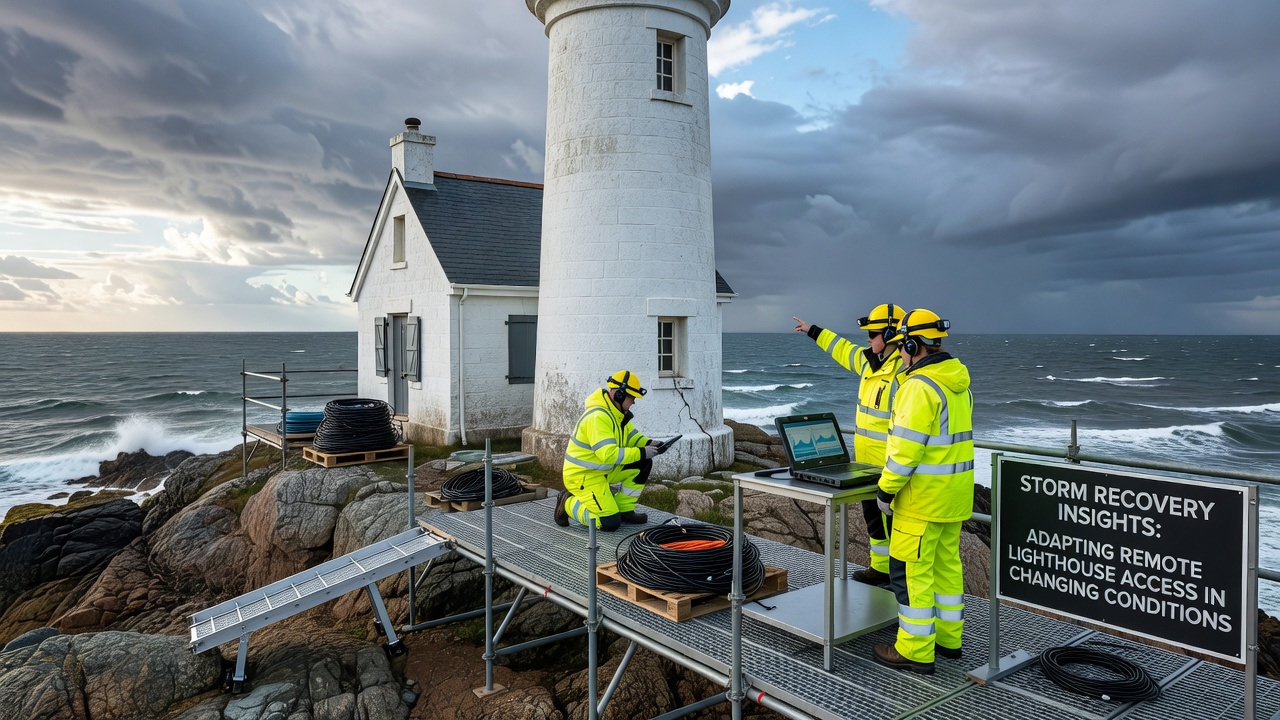
Research published by the Australian Bureau of Meteorology outlines how integrated forecasting models combine wave-height predictions with structural tolerance thresholds to generate access-risk indices, and lighthouse authorities in several regions now consult these indices when scheduling inspections. In parallel, trials of tethered drone corridors have begun at selected Pacific sites, where operators report reliable payload transfer even under 40-knot crosswinds. These developments build directly on recovery data that showed conventional boat and helicopter approaches accounted for the majority of delays following major events.
Integration of Historical Recovery Records
Recovery logs maintained by port authorities and maritime safety organizations reveal recurring failure points at stairwell foundations and causeway segments, and planners now prioritize reinforcement of these specific elements when designing remote alternatives. A study conducted by researchers at the University of Southampton examined ten years of post-storm reports from the English Channel and identified that lighthouses with pre-installed sensor redundancy resumed automated beacon operation within 48 hours in 85 percent of cases, whereas those without such systems averaged five days of interruption. Similar findings appear in Canadian Coast Guard documentation covering Labrador and Newfoundland stations, where elevated service conduits reduced the need for immediate physical access after successive nor'easters.
Agencies coordinate these insights through shared databases that standardize damage categories and recovery benchmarks, allowing cross-regional comparisons that accelerate design improvements. The resulting adaptations range from solar-powered winch lifts to fiber-optic data bridges that bypass vulnerable terrain entirely, and each iteration draws on quantified performance during documented storm sequences.
Conclusion
Storm recovery documentation continues to supply measurable indicators for refining remote lighthouse access strategies, and ongoing sensor deployments ensure that future modifications rest on expanding empirical foundations rather than isolated incidents. As environmental conditions evolve, the systematic application of these insights supports sustained operational continuity at sites where traditional approaches face increasing constraints.