Ulrich Washington · 24 September 2026
Fishing Fleets Navigate New Paths as Seal Protections and Current Changes Converge
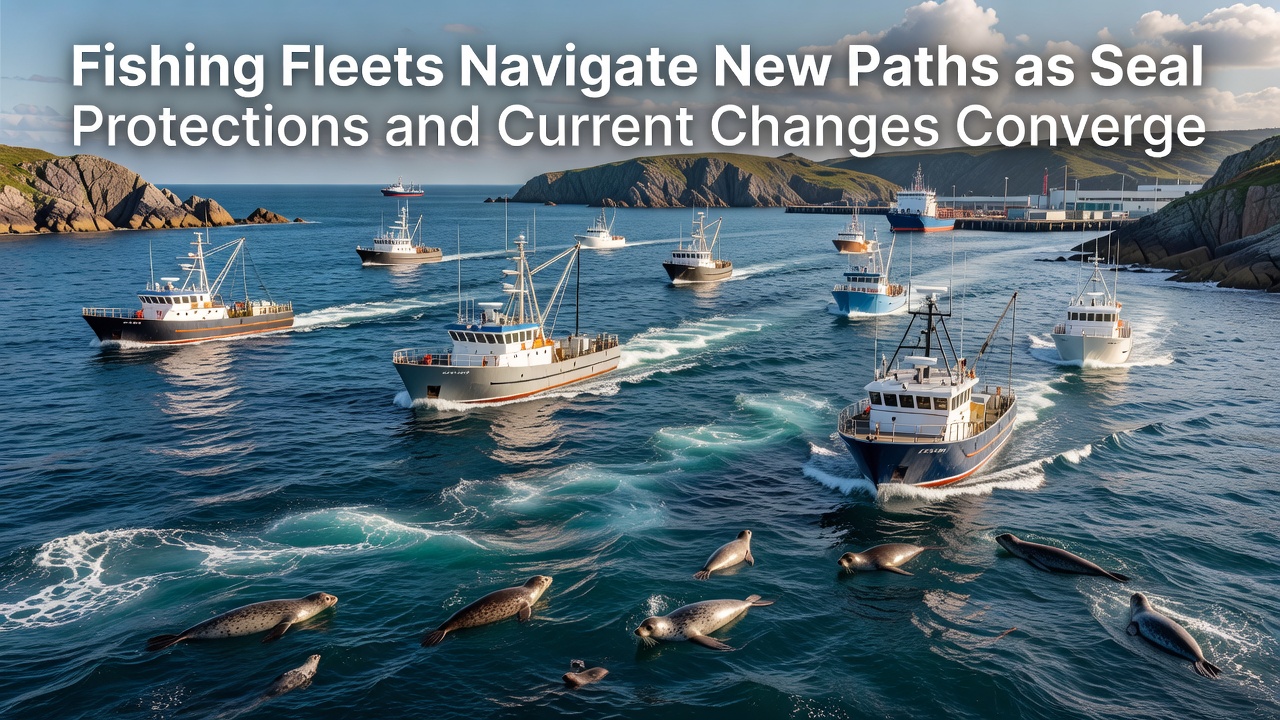
Commercial fishing operations along several coastlines have adjusted their traditional routes in recent seasons because expanded seal protection zones and alterations in major ocean current patterns have intersected at key fishing grounds. Data collected through vessel tracking systems show that fleets operating in the North Atlantic and parts of the Pacific have recorded longer transit times and modified catch locations since the start of 2025, with further refinements noted in September 2026 when updated marine mammal exclusion boundaries took effect in multiple jurisdictions.
Expansion of Seal Protection Boundaries
Authorities in Canada and the European Union have enlarged areas where grey seal and harbor seal populations receive additional safeguards, citing population recovery targets established under the Marine Mammal Protection Act equivalents and the EU Habitats Directive. These zones now extend into previously open fishing lanes, requiring vessels to maintain minimum distances or adopt seasonal closures that reduce available fishing days. Researchers tracking seal movements through satellite tags have documented increased foraging activity near these boundaries, prompting regulators to enforce buffer zones that fleets must respect to avoid penalties.
One study conducted by scientists at Memorial University in Newfoundland tracked over 200 tagged seals between 2023 and 2026 and found that the animals increasingly overlapped with cod and herring fishing areas, leading to tighter spatial restrictions. Fleets have responded by rerouting to alternative grounds, though this shift has concentrated effort in fewer locations and raised concerns about localized stock pressure according to fisheries management reports.
Ocean Current Shifts and Their Reach
Simultaneous changes in ocean circulation patterns have compounded the challenges for route planning. The Gulf Stream and its northern extensions have shown measurable deviations in speed and position, with data from the National Oceanic and Atmospheric Administration indicating a 12 percent reduction in northward transport volume during summer months compared with averages from the previous decade. These alterations influence water temperature gradients and nutrient distribution, which in turn affect the migration timing of target species such as mackerel and haddock.
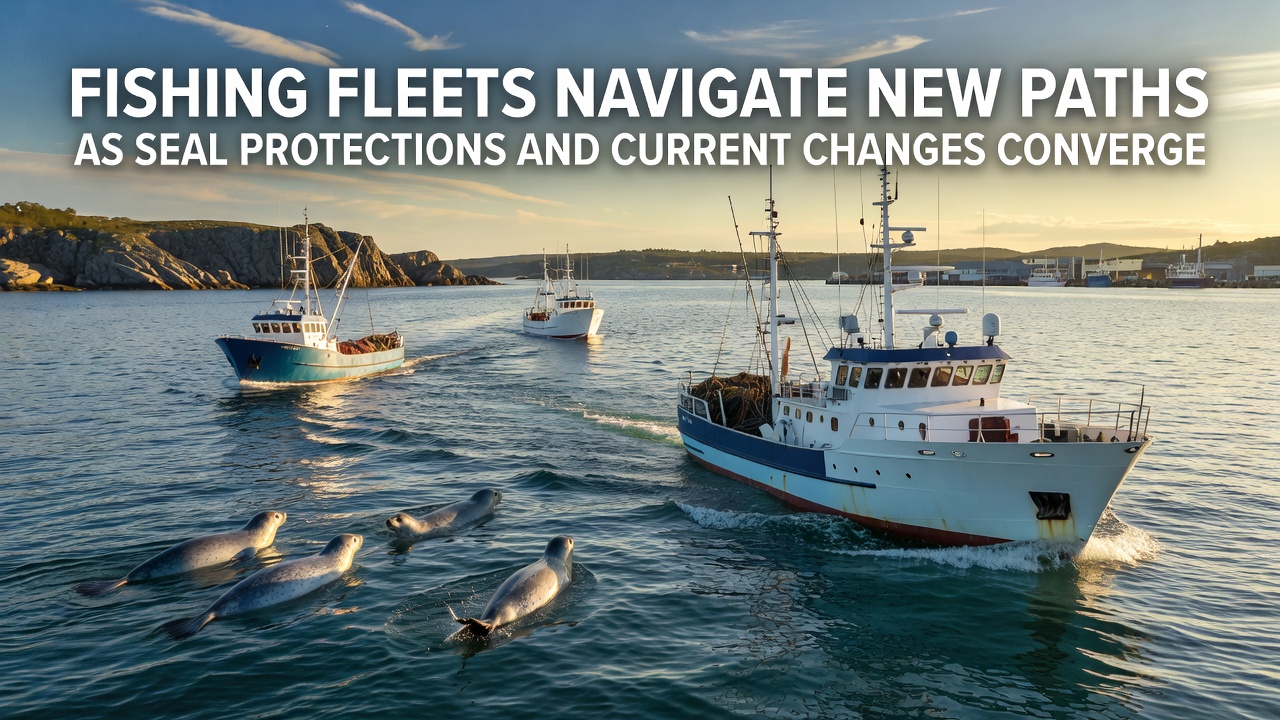
Vessel operators now consult updated current models produced by oceanographic institutes before departure, because the altered flow paths have displaced schools of fish from historical locations. In September 2026 several fleets reported that warm-water eddies formed farther offshore than in prior years, forcing them to extend trips by an average of 18 hours to reach viable concentrations. Industry associations have noted that fuel consumption per ton of landed catch rose measurably during these months, reflecting the combined effect of longer distances and current-assisted navigation adjustments.
Adaptations Across Fleets
Fishing companies have implemented several operational changes to maintain profitability under the new constraints. Some operators have invested in real-time oceanographic data subscriptions that integrate seal tracking alerts with current forecasts, allowing captains to plot courses that skirt protected zones while following favorable current streams. Others have shifted toward mid-water trawling techniques that reduce bottom contact in sensitive areas, aligning with updated gear regulations introduced in Canadian and Norwegian waters.
Observers note that smaller vessels without access to advanced routing software have faced greater difficulties, with a number consolidating into cooperatives to share data and coordinate trips. In one documented case, a fleet based in Nova Scotia reduced overlap with seal protection boundaries by 35 percent after adopting dynamic area management software developed through a partnership between the Department of Fisheries and Oceans and a university research group. Larger vessels have also begun experimenting with selective gear modifications that allow quicker escape from zones where seals aggregate, minimizing both regulatory risk and potential depredation of catches.
Regional Examples and Data Trends
Along the Norwegian coast, where harp seal protections overlap with shifting Atlantic inflow patterns, landings data compiled by the Institute of Marine Research show a 22 percent increase in average steaming time between 2024 and 2026. Similar patterns appear in reports from the Australian Fisheries Management Authority, which documented adjustments in southern bluefin tuna operations after current-driven temperature fronts moved closer to seal breeding colonies. These examples illustrate how the convergence of protection measures and physical ocean changes creates comparable pressures across hemispheres despite differing species and regulatory frameworks.
Statistical summaries released by the Food and Agriculture Organization indicate that global fishing effort redistribution has accelerated, with satellite vessel monitoring revealing higher traffic density in corridors that remain open. Yet these corridors themselves face scrutiny as seal populations continue to expand their range in response to prey availability influenced by the same current shifts.
Conclusion
The convergence of expanded seal protection zones and evolving ocean current dynamics has prompted measurable route modifications across multiple fishing fleets, supported by tracking data, regulatory updates, and oceanographic observations through September 2026. Continued monitoring by government agencies and research institutions will determine how these adaptations evolve as both marine mammal distributions and circulation patterns continue to change.